
How to Choose the Right Window Boxes for Structure, Planting, and Long-Term Performance
There’s a reason window boxes appear where people naturally slow down to look. A row of bright geraniums beneath a window, ivy trailing just past the trim. It’s not just decoration. It’s proportion, structure, and planting working together.
A window box is a mounted planter designed to sit beneath a window, creating a horizontal extension of the home’s architecture. When done correctly, it doesn’t feel added—it feels built in. That distinction is what separates something that looks temporary from something that holds its presence over time.
This guide breaks down how to choose the right window boxes, from sizing and materials to mounting and planting, so the result feels intentional from the start and continues to perform.
What Window Boxes Are and Why They Enhance Curb Appeal
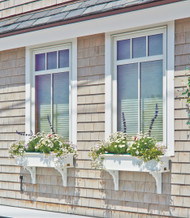
A window box sits directly beneath a window, supported by brackets or integrated hardware, but its role extends beyond its physical footprint. It changes how the home reads. Where a window alone can feel flat, outdoor window boxes introduce depth and dimension. They create a transition between architecture and landscape, something living, seasonal, and constantly evolving.
When scaled correctly, they ground the window visually, soften hard exterior lines, and reinforce the structure of the home. When they’re undersized or misaligned, they do the opposite, drawing attention in a way that feels unintentional.
Outdoor Window Boxes: Choosing the Right Style for Your Home
A window box should never feel like an accessory. It should feel integrated into the architecture in the same way trim or shutters do. That comes down to alignment. Traditional homes benefit from more detailed, decorative window boxes, while modern homes are better suited to cleaner lines and minimal profiles. Larger homes require large window boxes with enough visual weight to hold their presence.
The right window box reflects the language of the home. When that alignment is correct, the box becomes part of the structure, and the planting becomes the focal point.
Vinyl Window Boxes and Other Low-Maintenance Options
Material is where appearance and performance meet. Vinyl window boxes, particularly high-quality cellular PVC, are often chosen because they eliminate the maintenance cycle. They do not absorb moisture, they do not rot, and they maintain a consistent finish over time.
Lower-quality materials tend to fade under constant sun exposure, become brittle, and lose their structural integrity. Higher-quality systems maintain their density and shape, allowing them to perform long-term without ongoing upkeep. Wood offers a more traditional look, but it requires sealing, repainting, and eventual repair. Metal introduces a different aesthetic entirely, but brings considerations around heat retention and drainage.
Walpole Outdoors primarily uses solid cellular PVC materials for window boxes, designed for long-term durability and minimal maintenance. The goal is not just choosing a material that looks right now, but one that continues to perform without constant intervention.
Window Box Sizes and Depth: Getting the Proportions Right
This is where most window boxes succeed or fail. A box that’s too small looks like an afterthought. Too large, and it overwhelms the window it’s meant to complement. Proportion should feel natural, not forced. The width should closely follow the window opening. The depth should support healthy planting without projecting too far outward. The height should feel substantial enough to hold the arrangement.
Deep window boxes allow for more layered planting and better root development, while large window boxes help maintain proper scale on larger homes. The goal is balance. The box should feel like it was always meant to be there.
Window Box Brackets and Mounting Hardware Explained
What supports the window box is just as important as the box itself. Window box brackets typically fall into two categories: decorative brackets that provide visual support, and structural systems designed to carry weight. A fully planted window box is heavier than most people expect, especially after watering. Without proper support, even a well-built box can begin to sag or pull away from the home. A properly mounted system sits level, aligned with the window, and shows no visible strain. That’s what allows it to feel integrated rather than attached.
Window Box Installation: What Homeowners Should Know
Proper window box installation determines long-term performance. It’s not just about securing the box, but how it handles weight, water, and seasonal change. Secure anchoring into structural points is essential, as is spacing that protects the home’s exterior.
Water is the biggest variable. Without proper drainage, soil becomes saturated, increasing weight and putting stress on both the box and mounting system. Over time, this leads to failure. When done correctly, installation is invisible. When done poorly, the issues appear gradually through movement, sagging, or damage.
Best Plants and Flowers for Window Boxes
Planting is often the most noticeable feature, but it only works when supported by proper structure. The most successful window box plants follow a simple approach. There is structure, followed by softness. Trailing plants introduce movement, mid-height plants fill the space, and upright elements create definition.
Popular choices include flowering plants like petunias and geraniums, trailing greenery such as ivy, and functional options like herbs. The best plants for window boxes are those that grow into the space over time rather than overwhelming it immediately.
Custom Window Boxes vs Standard Options
Standard window boxes are designed to fit common dimensions. They are efficient and predictable. Window boxes can also be tailored as part of broader exterior design projects, allowing the size, proportion, and placement to align more closely with the home. That difference shows in alignment with trim, consistency across multiple windows, and overall proportion from a distance.
Rather than functioning as a separate product category, this level of customization is typically achieved through design planning and integration with other architectural elements. Every detail plays a role, but it’s thoughtful customization that makes an installation feel intentional rather than applied.
How to Choose the Best Window Boxes for Your Home
The right window boxes come down to proportion, material, and purpose. What looks right at installation should still look right after seasons of growth, weather, and use. The most successful choices are not based on immediate appearance, but on how the box performs over time.
Window boxes work because they sit at the intersection of architecture and planting. They are structured, but they are also alive. When proportion, material, and planting are aligned, they create something that feels permanent, natural, and intentional.
FAQ
What are window boxes used for?
Window boxes are exterior planters mounted beneath windows, used to introduce greenery, flowers, and visual depth to a home’s façade.
What is the best material for window boxes?
High-quality solid cellular PVC window boxes are among the most durable and low-maintenance options available.
How deep should a window box be?
It should be deep enough to support root growth and layered planting without overwhelming the window.
What plants work best in window boxes?
A balanced mix of trailing, mid-height, and upright plants creates the most effective result.