
The Containers That Quietly Define Your Landscape
Walk up to a well-designed home, and certain details stand out immediately. The entrance feels framed. The walkway has a quiet sense of rhythm. Greenery appears in just the right places.
Often, outdoor planters do much of that work, quietly shaping how an entrance, walkway, or patio is experienced as someone approaches the home. They frame doorways, soften patios and walkways, and help connect a home to the surrounding garden. When chosen carefully, a planter stops feeling like decoration and becomes part of the property's architecture.
A well-designed container does more than hold soil. It can anchor a front entrance, introduce rhythm along a path, or give structure to a patio that might otherwise feel open and undefined.
For homeowners thinking about outdoor spaces in the long term, it helps to look at planters the same way you would other architectural elements. Many homeowners start by exploring the design collections at Walpole Outdoors, where containers are designed to complement structures such as pergolas, gates, and fences throughout the property.
Why Outdoor Planters Matter in Landscape Design
Outdoor planters influence how a home is experienced from the moment someone approaches the property. Placed thoughtfully, containers help organize space. A pair beside the front door frames the entrance. Planters along a patio edge signal where the outdoor living area begins. Containers along a walkway guide visitors toward the home without walls or fencing.
These details are subtle, but they shape how the property feels. Well-chosen outdoor planters introduce rhythm, balance, and visual structure. They help outdoor spaces feel intentional rather than improvised. Containers that are too small or poorly placed tend to disappear. The right planters feel connected to the home's scale and architecture.
If you're considering new containers as part of a broader outdoor update, browsing the Walpole Outdoors collections can help you see how planters integrate with other architectural landscape elements.
Outdoor Planter Materials That Hold Up Over Time
Outdoor containers are constantly exposed to sun, rain, and seasonal temperature swings. Materials intended only for decorative use often struggle in those conditions.
Planters designed for exterior environments are built differently. They are meant to withstand moisture, remain structurally stable, and maintain their appearance outdoors over time. Several materials are commonly used in outdoor planters, each offering different advantages in durability, maintenance, and long-term performance.
Common outdoor planter material options include the following.
Solid Cellular Vinyl
Many modern outdoor planters are produced with materials designed specifically for exterior conditions. These materials resist moisture absorption and remain stable through seasonal temperature changes. Containers built this way tend to retain their shape, finish, and structural integrity longer than lightweight decorative planters.
For homeowners looking for containers that remain outdoors year-round with minimal upkeep, materials designed for exterior durability are often the most reliable option.
Choosing the Right Size Outdoor Planter
Scale plays a major role in how outdoor planters function within a landscape. A container that is too small disappears against the home. One that is too large can overwhelm a walkway or seating area. The right planter feels proportional to the architecture around it.
At front entrances, larger containers often work best. They provide enough space for shrubs, ornamental grasses, or seasonal plantings that give the doorway visual presence and structure. On patios, medium-to-large outdoor planters help anchor seating areas while softening stone or decking with greenery. Larger containers also provide practical advantages. They hold more soil, retain moisture longer, and allow plant roots to develop naturally.
Soil Depth and Plant Health
Container depth plays an important role in plant health. Shallow planters limit root growth and dry out quickly during warm weather. Deeper containers allow roots to expand and help soil retain moisture more evenly. Selecting outdoor planters with adequate depth helps plants remain healthy and stable throughout the growing season.
Where Outdoor Planters Work Best
Placement determines whether planters are perceived as decorative or architectural. Thoughtful placement integrates containers into the landscape's structure. Several areas around the home consistently benefit from outdoor planters, particularly spaces where containers can frame entrances, guide movement, or define outdoor living areas.
Front Entrances
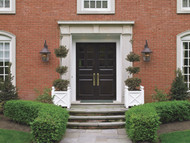
Few landscape elements change the feel of an entrance as quickly as a pair of containers beside the front door. Symmetry naturally draws the eye to the entry. Two matching outdoor planters frame the doorway and guide visitors toward the home.
This approach works particularly well with traditional architecture but can also complement contemporary homes when containers reflect the materials and proportions of the house.
Patios and Outdoor Living Areas
Outdoor planters help transform open patios into defined spaces. Containers placed around seating areas introduce greenery without blocking views, while taller plantings add vertical structure, softening stone patios and decking alike. Planters with attached lattice panels can further frame a space, create privacy in urban gardens, and add an extra layer of visual interest. The result is a patio that feels more like an outdoor room, seamlessly connected to the surrounding landscape.
Walkways and Garden Paths
Planters positioned along walkways introduce rhythm to the landscape, creating visual pauses that guide visitors as they move toward the home. Instead of a single uninterrupted path, containers break up the approach and help define transitions along the landscape.
Simple Planting Ideas for Outdoor Planters
The container provides the structure, while the plants bring the composition to life. Landscape designers often rely on a straightforward planting strategy, sometimes described as thrillers, fillers, and spillers.
Thrillers provide height and serve as the focal point.
Fillers create volume within the container.
Spillers soften the edges as they cascade over the rim.
This layered approach helps outdoor planters look balanced, natural, and visually complete.
Why Well-Built Outdoor Planters Last Longer
The difference between durable outdoor planters and inexpensive containers usually becomes clear after a few seasons. Lightweight decorative planters may fade under strong sunlight or crack as temperatures fluctuate. Moisture can weaken materials that were not designed for continuous outdoor exposure. Containers designed for exterior environments behave differently. They maintain their structure, hold their finish longer, and remain stable through seasonal weather changes.
At Walpole Outdoors, landscape elements are approached with the same mindset used in architectural design. Materials are selected for how they perform outdoors over time, not simply for how they appear at installation. That focus on craftsmanship allows outdoor planters to remain part of the landscape rather than to serve as temporary décor.
If you're exploring containers as part of a broader outdoor project, it can be helpful to review the Walpole Outdoors design collections to see how planters complement other outdoor structures.
Outdoor Planters Within a Larger Landscape Design
Planters rarely exist on their own. They look best when they relate to the structures around them. Containers placed near pergolas, gates, or entry features help visually connect those elements to the surrounding garden. The result is a landscape where individual pieces feel related rather than scattered. Homeowners often review containers alongside architectural structures within the collections at Walpole Outdoors to see how these elements work together across the property.
When outdoor planters share the same sense of proportion, materials, and craftsmanship as nearby structures, the landscape feels intentional. The containers become part of the property's design.
FAQ
What materials work best for outdoor planters?
Materials designed for exterior exposure perform best. Stone containers provide durability and visual weight, while solid cellular vinyl is designed to resist moisture and temperature changes.
How large should outdoor planters be?
Outdoor planters should be large enough to support mature root systems. Larger containers retain moisture better and provide a stronger visual presence near entrances and patios. For herbs and smaller plants, shallower planters work well, offering easier access for harvesting and fitting neatly on windowsills, railings, or small balcony spaces.
Do outdoor planters need drainage?
Yes. Proper drainage prevents water from collecting in the soil and damaging plant roots.
Can outdoor planters stay outside during winter?
Many containers designed for exterior use can remain outdoors year-round and tolerate freezing temperatures.
What plants grow well in outdoor planters?
A balanced arrangement usually includes a taller focal plant, mid-height plants that fill the center, and trailing plants that soften the edges.
How many outdoor planters should be placed at a front entrance?
Two matching containers placed on either side of the doorway usually create the strongest visual effect.