
Outdoor Lanterns Guide: Materials, Styles, and Lighting Options
What Outdoor Lantern Lighting Is and Why It Matters for Exterior Design
Outdoor lanterns do more than illuminate property. Whether incorporated into gates, fence posts, pergolas, porches, or entryways, the right fixtures help define how a home is experienced after dark. Well placed lantern lighting can guide guests into an entryway, create warmth along a path, highlight architectural details, and give outdoor spaces a more finished and intentional presence.
Unlike purely functional exterior fixtures, outdoor lantern lighting brings both purpose and architectural character to a property. The right outdoor lighting fixture can support traditional, coastal, contemporary, or timeless exterior styles depending on its placement, material, finish, and proportion.
For homeowners, choosing outdoor lanterns is not simply about brightness. It is about proportion, durability, material, and the way light interacts with the surrounding architecture.
Outdoor Hanging Lanterns vs Outdoor Wall Lanterns
The first choice with any lantern is often placement. Outdoor hanging lanterns and outdoor wall lanterns serve different purposes, and each one changes the way light is experienced.
Outdoor hanging lanterns are typically used where overhead structure already exists. They work well under covered porches, pergolas, and entryways where the fixture can hang with enough clearance and visual balance. Because they sit within the space rather than against a surface, hanging lanterns often create a more atmospheric glow. They can make an entry feel more formal, a porch more inviting, or an outdoor room feel more defined.
Outdoor wall lanterns are mounted directly to the home, gate structure, garage, fence column, or exterior wall. They are often used beside doors, along exterior walls, near patios, or around outdoor living spaces where the goal is to frame an architectural feature, improve visibility, or establish symmetry across the exterior.
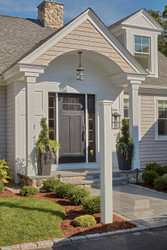
Post-mounted lanterns are often incorporated into estate entrances, driveway approaches, gate columns, fence lines, and garden transitions to reinforce the architectural rhythm of the property while improving visibility and ambiance. Walpole Outdoors offers a range of lantern post kits, including the Hammond, Oxford, Norfolk, Maryland, and Washington Lantern Posts, that pair a crafted wooden post with a quality lantern fixture, creating a cohesive and durable post-mounted solution.
Path-mount lanterns are used at ground level to illuminate walkways, garden borders, and landscape transitions. Walpole Outdoors offers three path light styles that provide low-level directional light along driveways, garden paths, and outdoor approaches where subtle, close-to-grade illumination is the goal.
The right choice depends on the structure of the home. A covered porch may call for a hanging lantern. A side entry may need a wall-mounted fixture. Estate entrances, pergolas, and outdoor living spaces may benefit from post-mounted lantern lighting that feels integrated into the broader landscape and exterior design.
Copper Outdoor Lanterns vs Brass Outdoor Lanterns
Material has a major impact on how outdoor lanterns look when they are installed and how they age overtime. Copper outdoor lanterns and brass outdoor lanterns are both known for their warmth, durability, and classic exterior character, but they create different impressions.
Copper outdoor lanterns often feel rich and traditional at first, with a finish that can deepen and change as it responds to the elements. Over time, copper develops a natural patina, giving the fixture a more lived-in, architectural quality. This makes copper especially well suited for homes where the exterior design is meant to feel established, coastal, historic, or handcrafted.
Brass outdoor lanterns offer a slightly more refined appearance. Depending on the finish, brass can feel polished, antique, dark, or understated. Like copper, brass can age beautifully, especially when selected for outdoor use and paired with the right architectural style. It works well on traditional homes, formal entries, garden structures, and properties where the lighting should feel substantial without feeling overly decorative.
Both materials bring character that standard finishes often cannot. The decision comes down to the home’s architecture, the surrounding materials, and whether the desired effect is warmer, more rustic, more formal, or more tailored.
Outdoor Lantern Materials, Finishes, and Weather Resistance
Material selection plays an important role in how exterior lantern lighting complements the surrounding architecture and landscape. Walpole Outdoors offers lanterns in a range of metal finishes including Antique Brass, Dark Brass, Dark Antique Brass, Antique Copper, Blackened Brass, Black, Verdi Gris, and Oil Rubbed Bronze, each creating a different visual effect depending on the style of the property.
The right finish should feel cohesive with the home’s exterior materials, entry features, gates, fencing, pergolas, and surrounding outdoor spaces. Warmer finishes can create a more traditional or timeless appearance, while darker finishes often support cleaner and more architectural exterior styles.
Exterior lantern lighting should also be selected with durability in mind. Outdoor fixtures are exposed to changing temperatures, moisture, sunlight, wind, and seasonal weather conditions throughout the year. Quality materials and weather-resistant finishes help support long-term performance while maintaining the appearance of the fixture over time.
A variety of lantern styles are available with what is known as a living finish. Unlike coated or lacquered metals, copper and brass without a protective coating will oxidize naturally over time, developing a unique patina as the finish responds and transforms through exposure to the environment. This process of aging in their natural state is part of what makes living finishes a sought-after choice for exterior lantern lighting.
Because every finish application and environment is different, no two pieces will age in exactly the same way. Environmental factors that may affect the surface of a fixture include rain, sun, wind, salt air, proximity to the ocean, pollutants, humidity, and cleaning products and household chemicals. Over time, these conditions add depth and character to the finish, making each piece more distinctive as it ages.
Exterior lantern lighting should also be selected with durability in mind. Outdoor fixtures are exposed to changing temperatures, moisture, sunlight, wind, and seasonal weather conditions throughout the year. Quality materials and weather-resistant finishes help support long-term performance while maintaining the appearance of the fixture over time.
The best exterior lantern lighting balances appearance with performance. A lantern may look beautiful when it is first installed, but the real measure is how well it continues to perform over time. Strong material construction, proper finish selection, quality glass, and appropriate electrical rating all matter. Walpole Outdoors lanterns are available with clear glass, seedy glass, optic glass, and beveled glass options, allowing homeowners to select the light quality and visual character that best suits their exterior.
For high-visibility areas like front entrances, estate gates, pergolas, driveway approaches, fence columns, and outdoor living spaces, weather resistant outdoor lanterns become part of the overall exterior architecture rather than simply decorative accessories.
Modern and Contemporary Outdoor Lantern Styles
Modern outdoor lanterns are defined by restraint. They rely on clean lines, balanced proportions, and simpler silhouettes rather than heavy ornament. The design may still reference traditional lantern shapes, but the details are reduced, refined, and more architectural.
Contemporary outdoor lantern styles often work best when they complement the overall architectural language of the property. Clean lines, balanced proportions, and restrained detailing can help support modern homes, transitional exteriors, and outdoor living spaces without overwhelming surrounding materials or structures.
The key is proportion. A lantern that is too small can feel like an afterthought. A lantern that is too large can overpower the entry or wall surface. Modern and contemporary outdoor lantern styles work best when the scale of the fixture matches the scale of the home.
Finish selection also plays an important role in how exterior lantern lighting integrates with the surrounding architecture and landscape. Darker finishes such as Black and Blackened Brass can create a cleaner architectural appearance, while warmer tones like Antique Brass and Antique Copper add softness and visual warmth to outdoor spaces.
Decorative Outdoor Lanterns and Exterior Design Impact
Decorative outdoor lanterns are often thought of as finishing touches, but they can have a larger impact on the overall design of a property. They influence curb appeal, guide the eye, and help establish the rhythm of the exterior.
A lantern beside a front door creates a point of arrival. A pair of wall lanterns can frame an entry. Post-mounted lanterns can help define estate entrances, driveway approaches, gates, pergolas, fence systems, and garden pathways while reinforcing the overall exterior character of the property.
The strongest outdoor lantern ideas begin with the architecture of the home. A coastal home may call for nautical shapes, seeded glass, and aged metal. A traditional home may benefit from classic lantern forms and symmetrical placement. A modern home may need a cleaner fixture with less ornament and a stronger silhouette.
Decorative outdoor lanterns do not have to feel elaborate. In many cases, the most effective lantern is the one that feels considered, balanced, and appropriate to the setting.
Outdoor Lantern Lighting Options: LED, Solar, and Low Voltage
Outdoor lantern lighting can be powered and configured in several ways. LED outdoor lanterns, solar outdoor lanterns, and low voltage outdoor lanterns each have a role, depending on the location and lighting goal.
LED outdoor lanterns are commonly used for their efficiency, long life, and consistent light quality. They can provide strong illumination without excessive energy use, making them useful for entryways, wall lights, post lanterns, and outdoor living areas.
Solar outdoor lanterns can be useful in areas where wiring is difficult or where the light is primarily decorative. They are often used for garden accents, temporary lighting, or softer landscape effects. Because they depend on sun exposure and battery performance, they may not provide the same consistency as wired fixtures in every location.
Low voltage outdoor lanterns are often used as part of a broader landscape lighting plan. They can help illuminate paths, garden areas, driveways, and outdoor transitions with controlled, efficient light. Low voltage systems are especially useful when the goal is to layer lighting across a property rather than rely on one or two bright fixtures.
The best option depends on the purpose. Entry lighting needs reliability. Garden lighting may need subtlety. Outdoor entertaining spaces may need warmth, control, and flexibility.
Outdoor Lantern Brightness, Efficiency, and Light Quality
Brightness is only one part of exterior lantern lighting. Too much light can feel harsh. Too little light can make a space feel unfinished or unsafe. The goal is to create enough illumination for visibility while preserving the atmosphere of the home and landscape.
Light quality matters just as much as output. A warm glow often works better for entries, patios, porches, and garden areas because it feels more inviting and less severe. Cooler light may appear brighter, but it can also feel less residential and less comfortable in outdoor living spaces.
Efficiency should also be considered. LED outdoor lanterns can help reduce energy use while still providing dependable illumination. For larger properties, combining wall lanterns, post lanterns, path lighting, and low voltage systems can create a more balanced result than relying on a single bright fixture.
The most successful exterior lantern lighting is layered. It supports safety, creates ambiance, and enhances the property without overwhelming it.
Where to Place Outdoor Lanterns for Function and Ambiance
Placement determines whether outdoor lanterns feel natural or disconnected from the home. Common placement areas include front entries, side doors, garage doors, patios, porches, gates, fences, driveways, and garden paths.
Outdoor wall lanterns are often used near doors and vertical surfaces, while lantern posts can define longer approaches and open landscape areas. Outdoor hanging lanterns work best where there is a ceiling, beam, or overhead structure to support them.
For function, lanterns should make it easier to navigate the property. For ambiance, they should create warmth and visual rhythm. Good placement feels intuitive. The light appears where the home needs emphasis, orientation, or atmosphere.
How to Choose the Right Outdoor Lanterns for Your Home
Choosing the right outdoor lanterns begins with the home itself. The fixture should match the scale, style, and material language of the property. A lantern should feel substantial enough for the architecture but not so large that it dominates the exterior.
Start with placement. Determine whether the space calls for outdoor wall lanterns, outdoor hanging lanterns, post-mounted lanterns, or a combination of fixture types. Then consider material, finish, light output, and power source.
Finally, think about longevity. Outdoor lanterns are visible every day. They should be chosen not only for how they look at installation, but for how they will age, perform, and support the home over time. For homeowners comparing styles, materials, and placement options, outdoor lanterns should be selected as part of the larger exterior design, not as isolated accessories.
Outdoor Lanterns Bring Structure, Warmth, and Long-Term Exterior Character
Outdoor lanterns work because they serve more than one purpose at once. They help people move safely through a property, extend the use of outdoor spaces, and add character to the exterior architecture.
The right lantern does not simply light a wall, porch, gate, or path. It changes how the space feels. It creates a sense of arrival, adds depth after dark, and gives the property a more finished presence.
With the right material, placement, and lighting approach, outdoor lanterns become part of the home’s long-term design rather than a temporary exterior accessory.
FAQ
What are the best materials for outdoor lanterns?
Copper, brass, aluminum, and other durable metals are commonly used for outdoor lanterns because they offer strength, weather resistance, and long-term exterior appeal. The best material depends on the home’s architecture, exposure, and desired finish.
Are copper outdoor lanterns better than brass outdoor lanterns?
Copper and brass outdoor lanterns are both strong choices for exterior lighting. Copper often develops a warmer, more weathered patina over time, while brass can feel more refined or traditional depending on the finish.
Where should outdoor wall lanterns be placed?
Outdoor wall lanterns are commonly placed beside front doors, side entries, garage doors, patios, gates, and exterior walls. They should be positioned where they provide useful illumination while complementing the scale and symmetry of the home.
Are LED outdoor lanterns a good choice?
LED outdoor lanterns are a strong option for many exterior applications because they offer efficient performance, dependable brightness, and long bulb life. They are especially useful for entryways, patios, post lanterns, and other frequently used outdoor areas.