

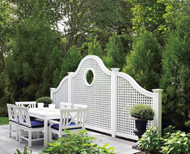
Lattice panels work best when they feel intentional for the space. When they’re wrong, they look out of place. When they’re right, they quietly define the area, support growth, and add structure without calling attention to themselves. At Walpole Outdoors, lattice is treated the same way as fencing or pergolas, as part of the landscape architecture rather than a decorative afterthought.
This guide explains how lattice panels are installed, their different materials and patterns, and how to choose the right option for your garden, deck, porch, or privacy application.
What Lattice Panels Are and How They’re Used
Lattice panels are structured panels made from evenly spaced strips arranged in a grid. Outdoors, they are used to add definition without enclosure and structure without heaviness. Walpole Outdoors approaches lattice as a transitional element, something that connects buildings, gardens, and outdoor rooms rather than separating them.
Common uses include:
- Supporting climbing plants
- Creating privacy without blocking light
- Finishing decks and porches
- Dividing outdoor spaces in a subtle way
Outdoor lattice panels are most effective when they support how a space is used, rather than trying to stand out on their own. When proportion, spacing, and placement are considered together, lattice can make a space feel finished without feeling enclosed.
Types of Outdoor Lattice Panels for Different Applications
Different applications call for different approaches. Garden lattice panels and trellis panels are typically vertical, providing support for vines and helping plants grow in an organized way. Privacy lattice panels and outdoor lattice screens are used to soften sightlines while maintaining airflow. Lattice panels for decks are often installed beneath raised platforms or along railings to create a finished appearance.
Walpole Outdoors evaluates lattice the same way it evaluates fencing: What does this edge need to do? Should it disappear behind planting, define an entry, or create a breathable screen? The answer shapes pattern, scale, and material. Choosing the right type starts with understanding the role the panel needs to play.
The Gold Standard: Solid Cellular Vinyl
Choosing the right material means considering appearance, maintenance, and longevity together. Walpole Outdoors builds exclusively with solid cellular vinyl (CPVC). It carries the weight and presence of traditional wood but resists the moisture that causes wood to warp, splinter, and decay.
Solid cellular vinyl holds its shape, requires minimal maintenance, and performs reliably through decades of outdoor exposure. It delivers the classic lattice look homeowners expect with the long-term durability modern homes demand.
Decorative Lattice Panel Patterns and Styles
Pattern choice has a noticeable impact. Square lattice panels are the most common, offering a clean, balanced look that works across many outdoor settings. Tighter spacing provides more coverage and privacy; wider spacing feels lighter and more open.
At Walpole Outdoors, restraint is often the guiding principle. Lattice should feel scaled to the architecture the way a porch railing or window grille would, supportive rather than dominant. Decorative lattice panels are most successful when they relate to nearby fencing, trim, and garden structures instead of competing with them.
Choosing Lattice Panels by Climate and Environment
Lattice panels may be chosen to fit your home, but they also need to fit their environment. Sun exposure, moisture, temperature swings, and wind all influence how an outdoor panel looks and performs over time. These considerations are especially important across the Northeast, where humidity, coastal salt air, and freeze-thaw cycles place significant stress on exterior materials.
Weather Considerations: Humid vs. Dry Climates
Outdoor lattice must perform through humidity, direct sun, and seasonal temperature changes. Walpole Outdoors builds its panels from solid cellular vinyl (CPVC), a material designed to remain stable in these conditions. Unlike wood, it does not absorb moisture, rot, or splinter. It maintains its shape and appearance even after years of outdoor exposure.
Coastal Environments: Salt, Wind, and Sun
Salt air, wind, and intense sunlight accelerate wear. Walpole Outdoors often recommends framed panels and reinforced mounting in these conditions so the installation performs like exterior millwork rather than a lightweight screen. This approach helps lattice panels better resist corrosion, movement, and long-term surface degradation in exposed coastal settings.
Cold Climates: Freeze and Thaw Cycles
Freeze-thaw cycles cause materials to expand and contract. Allowing for drainage and flexible mounting points improves long-term performance, particularly when lattice is used beneath decks or along long porch runs. These considerations help reduce stress on joints and fasteners as temperatures shift seasonally.
Direct Sun vs. Shaded Areas
Panels in full sunlight weather differently from those in covered areas. UV-resistant materials and finishes become more important on south-facing elevations. Over time, consistent exposure can lead to uneven fading or surface breakdown if protection isn’t accounted for in the design.
The Importance of Scale
The right size makes the whole project click. Large, standalone panels work well as yard boundaries or driveway screens, giving you privacy without feeling boxed in. Smaller, framed panels are perfect for decorative spots, like finishing the space under a porch or accenting a garden wall to create a matching, finished look.
Plan for Where You Live
There is no single right lattice for every environment. Walpole Outdoors begins with climate so the panel that looks right on installation day still looks right years later. This approach ensures material choice, construction, and finish are aligned with real-world exposure rather than aesthetics alone.
Garden Lattice Panels and Plant Support
In gardens, lattice provides structure for climbing plants while keeping growth controlled. Used behind beds, along fences, or as standalone elements, it adds height and definition without crowding the space. Walpole Outdoors designs garden lattice panels to disappear over time, letting the planting become the focal point while the panel quietly guides growth and scale.
See garden lattice panel ideas
Privacy Lattice Panels and Outdoor Screens
Privacy doesn’t always require solid barriers. Lattice privacy screens soften boundaries while still allowing light and airflow. They work well around patios, seating areas, and property edges, especially when paired with landscaping. Walpole Outdoors often layers lattice panels with planting or fencing so privacy feels gradual rather than abrupt, more like a garden wall than a visual barrier.
Lattice Panels for Decks and Porches
Lattice panels for decks are commonly used to conceal structural elements beneath raised platforms. Decorative porch lattice panels can frame entryways or add detail without overwhelming the space.
Consistency with the existing space is critical here. Walpole Outdoors matches lattice scale to railings, posts, and trim so decks and porches read as one composition instead of separate parts.
Lattice Planter Boxes and Framed Panels
A lattice planter box combines planting and structure in one element, making it useful for smaller spaces. A framed lattice panel adds rigidity and creates a more finished installation, especially when panels are mounted to walls or fencing.
Walpole Outdoors treats framing like exterior trim, clean edges, proper proportions, and durable joinery so the panel feels built into the landscape rather than attached to it.
A Step-by-Step Guide to Picking the Right Lattice for Your Space
Start with function. Decide whether the goal is privacy, plant support, or visual structure. Then choose your material, pattern, and scale to fit your home and landscape.
Lattice panels work best when they are planned carefully and used in moderation. When done well, they add clarity and balance to outdoor spaces, quietly improving how those spaces look and function over time, the same way a well-placed fence or pergola would.
Here are some questions to help guide the process:
What role should the lattice play in your space?
Is the goal added privacy, plant support, visual structure, or light screening? Defining the primary function helps guide pattern density, panel height, and placement.
Where will the panel be installed?
Will it be in full sun, partial shade, or a protected area? Is it exposed to moisture, wind, or coastal conditions? Environmental exposure should inform both material and finish selection.
How open or enclosed should the space feel?
Tighter lattice patterns create more privacy and visual weight, while larger openings feel lighter and more open. The right balance depends on how the space is used and viewed.
What scale fits your property and landscape?
Large standalone lattice panels can define yard edges or driveways, creating privacy without the weight of a solid barrier. Smaller framed panels are often used closer to the home as decorative elements beneath decks, along porches, or within garden structures.
How will the lattice connect to surrounding structures?
Should it align with fencing, railings, posts, or plantings? Thoughtful integration helps lattice feel like a built-in design element rather than an afterthought.
How should the panel age over time?
Consider how much maintenance you’re comfortable with and how the material will weather in your climate. The right choice should maintain its character without constant upkeep.
Explore lattice panel materials and styles
Upgrade to a Custom Lattice Screen for Privacy & Design
If you’re looking to go beyond standard lattice panels, custom lattice screens offer a more tailored solution for privacy, airflow, and architectural style. These are ideal for enclosing patios, defining outdoor spaces, or creating a finished, high-end look.
Explore Custom Lattice Options
Lattice Panel FAQs:
How do you build a lattice panel?
Most lattice panels are installed rather than built from scratch. Premade panels are mounted to frames, posts, or existing structures. Building a lattice panel typically involves cutting lattice to size and securing it within a frame for stability.
Do lattice panels need to be framed?
Framing is recommended, especially for outdoor use. A framed lattice panel holds its shape better, installs more easily, and provides a more finished appearance over time.
Can lattice panels be cut to size?
Our panels come in standard professional sizes designed for outdoor installations. While they are not custom-built to unique shapes, they can be trimmed on-site when needed to fit a space properly. Selecting the size closest to your installation helps maintain the grid pattern and overall proportions.
Where should you buy lattice panels?
Lattice panels should be sourced from manufacturers that specialize in exterior architectural materials. Construction quality, material density, and finish all affect how well a panel performs outdoors. Walpole Outdoors lattice panels are built from solid cellular vinyl and designed for long-term outdoor use, offering the durability and finish quality expected in professional landscape and architectural applications.
Can lattice panels be painted?
Yes. Our lattice comes with a factory-applied finish that protects the material from the start. Walpole Outdoors’ solid cellular vinyl panels can also be painted with vinyl-safe paint, allowing them to match surrounding trim or architectural colors when needed.