

Garden Obelisk Trellises: Best Uses, Styles, and Climbing Plants
A Simple Garden Structure That Adds Height and Lasting Visual Interest
A garden obelisk trellis is one of the easiest ways to bring height, structure, and a visual aesthetic into an outdoor space. Unlike a flat trellis that sits against a wall or fence, an obelisk trellis stands on its own, creating a vertical focal point that can support climbing plants while adding an architectural accent to any garden.
Whether placed in a flower bed, vegetable garden, courtyard, or along a walkway, a garden obelisk draws the eye upward while giving climbing plants a defined structure to grow around. It can be simple and understated, tall and dramatic, or decorative enough to serve as a garden feature even before the plants fill in.
For homeowners looking to add structure to outdoor spaces, Walpole Outdoors garden obelisks offer a practical and elegant way to combine plant support with timeless design.
What a Garden Obelisk Trellis Is and Why It Works in Landscapes
A garden obelisk trellis is a freestanding vertical garden structure, usually built with an open framework that allows climbing plants to weave, wrap, and grow upward. Its tapered shape gives it a sculptural quality, while the lattice or open sides make it useful for supporting vines, flowers, and other climbing plants.
That combination of form and function is what makes a garden obelisk trellis so effective. It does more than simply support climbing plants. It gives the landscape a stronger sense of shape and intention.
In a garden bed, an obelisk trellis can add height among lower plantings. In a vegetable garden, it can support climbing crops while creating a more polished appearance. In a formal landscape, it can act as an ornamental centerpiece. In a cottage garden, it can soften over time as flowering vines grow through the frame.
A well-placed garden obelisk trellis helps create balance, especially in landscapes that feel too flat or horizontal. It adds a vertical element without requiring a large footprint.
Garden Obelisk vs. Flat Trellis: Design and Functional Differences
A flat trellis is typically installed against a wall, fence, garage, or garden structure. It is ideal when you want climbing plants to grow across a vertical surface or soften the look of an existing exterior feature.
A garden obelisk, by contrast, is designed to stand independently. That makes it useful in areas where there is no wall or fence nearby. It can be placed directly in a planting bed, centered in a garden, positioned at the end of a path, or used in pairs to frame an entrance.
Both options can function as a vertical garden trellis, but they serve slightly different purposes.
A flat trellis is best when you want to cover or decorate a surface. An obelisk trellis is best when you want to create a freestanding focal point. Because of its shape, a garden trellis obelisk can be viewed from multiple angles, making it especially effective in open garden spaces.
Metal Garden Obelisks and Durable Trellis Materials
Many homeowners search for metal garden obelisks or metal trellis obelisks because they want something sturdy enough to support climbing plants outdoors. Metal can offer strength, but it is not the only durable option.
Material choice matters because a garden obelisk trellis needs to hold up through changing weather, moisture, sun exposure, and seasonal plant growth. Depending on the material and construction quality, some garden obelisks may be more susceptible to bending, shifting, rust, or visible wear over time.
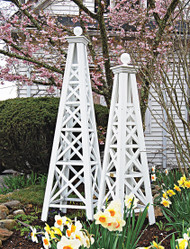
Walpole Outdoors’ lattice obelisk is crafted in solid cellular vinyl and designed as a decorative, durable support for climbing plants. It is available prefinished in White or Verde Green, giving homeowners a refined alternative to traditional metal garden obelisk designs.
Solid cellular vinyl is designed to deliver the look of a classic painted garden structure while offering the low-maintenance benefits associated with the material. For homeowners who want a crisp, architectural garden feature without the upkeep concerns that may come with some painted wood or metal options, it can be a strong choice.
Ornamental and Decorative Garden Obelisk Designs
An obelisk trellis does not have to disappear behind plants. In many gardens, the structure itself is part of the design.
Ornamental garden trellis styles can add character before the first vine begins to climb. The shape, color, cap, lattice pattern, and overall proportion all influence how the obelisk fits into the landscape. A simple white garden obelisk can feel classic and clean. A green obelisk can blend more naturally into planting beds. A decorative cap can make the structure feel more finished and intentional.
Walpole Outdoors offers finishing options like the Obelisk Southport Cap and Obelisk Sphere Cap, allowing homeowners to add a more refined decorative detail to the top of the structure. These small design choices matter. Decorative garden trellises do more than support climbing plants. They help define the overall style of the garden. The right garden obelisk design can feel formal, coastal, classic, cottage-inspired, or quietly architectural depending on where it is placed and how it is paired with surrounding plantings.
Where to Place a Garden Obelisk Trellis for Visual Impact
Placement is one of the most important decisions when choosing a garden obelisk trellis. Because an obelisk is vertical and freestanding, it naturally attracts attention. That makes it especially useful in areas where the landscape needs height, rhythm, or a stronger focal point.
A tall garden obelisk can work well in the center of a planting bed, where it gives the eye a place to land. It can also be placed at the end of a walkway to create a destination point. In a vegetable garden, it can bring order to climbing crops while making the space feel more designed. In a courtyard or patio garden, an obelisk can add height without overwhelming a smaller footprint.
Pairs of obelisks can also be used symmetrically. Placing one on each side of a garden path, gate, or entry point can create a more formal look. Used this way, garden obelisks act almost like living columns once vines begin to grow. When selecting a location, consider how the obelisk will be viewed from different angles. Since an obelisk trellis is meant to be seen from multiple sides, it usually works best where it has room to stand on its own.
Obelisk Trellises for Climbing Plants and Vertical Growth
An obelisk trellis for climbing plants gives vines and climbers the support they need to grow upward instead of sprawling across the ground. This can help create a cleaner, more organized garden while also allowing plants to receive better air circulation and sun exposure.
A climbing plant obelisk is especially useful in smaller gardens because it encourages vertical growth. Instead of using more horizontal space, plants can grow up the structure. This makes obelisks a smart choice for compact planting beds, courtyards, raised beds, and narrow garden areas.
As plants climb, the obelisk becomes part of the living landscape. Early in the season, the structure adds definition on its own. Later, it becomes covered with foliage, flowers, or fruit, depending on the plants selected.
This is what makes garden structures for climbing plants so valuable. They give the garden shape before the plants mature and then continue supporting the landscape as it changes through the season.
Best Climbing Plants for Obelisk Trellises
The best plants for a garden obelisk trellis are climbers that can naturally attach, twine, or be gently trained around the frame. Flowering vines are popular because they soften the structure and add color. Edible climbers can also work well, especially in kitchen gardens or raised beds.
Popular climbing plants for garden obelisks include clematis, climbing roses, sweet peas, morning glories, jasmine, honeysuckle, or other flowering vines suited to the local climate and sun conditions. In vegetable gardens, peas, pole beans, and some smaller climbing crops can also be trained on an obelisk-style support.
The right choice depends on the size of the obelisk, the strength of the plant, and the overall look you want. A delicate flowering vine can create a light, romantic effect. A heavier climber may require a sturdier structure and more regular training.
When choosing plants, consider mature size, growth habit, sunlight needs, and how aggressively the plant climbs. The goal is to pair the plant with a structure that can support it comfortably.
Using Obelisk Trellises with Flowering Vines Like Clematis
Clematis is one of the most common plants associated with obelisk trellises because it offers colorful flowers and a graceful climbing habit. An obelisk trellis for clematis can give the vine a clear structure to climb while allowing the flowers to appear at different heights throughout the garden.
Because clematis varieties can differ in size, bloom time, and pruning needs, it is important to choose a variety that suits the scale of the obelisk and the conditions of the planting area. Some clematis plants stay more compact, while others can grow vigorously and may need more room.
An obelisk trellis can also help showcase clematis more effectively than a fence or wall in certain settings. Since the structure is freestanding, flowers can be viewed from multiple sides. This makes it an attractive option in the center of a planting bed, near a patio, or along a garden path where the flowers can be appreciated from multiple angles.
For the best effect, place the obelisk before the plant becomes established. This allows the clematis or other flowering vine to be trained gently from the beginning.
How to Choose the Right Garden Obelisk Trellis for Your Space
The right garden obelisk trellis should fit both the plant and the place. Start by thinking about scale. A tall garden obelisk can create a dramatic focal point, but it should feel proportionate to the surrounding beds, pathways, or garden structures. In a smaller space, a more modest size may provide enough height without overpowering the area.
Next, consider material. A durable obelisk trellis should be strong enough to support the plants you want to grow and resilient enough to remain outdoors through the seasons. Low-maintenance materials can be especially helpful for homeowners who want the beauty of a classic garden structure without frequent upkeep.
Style also matters. A garden obelisk should complement the home and surrounding landscape. White may feel crisp and traditional. Green may blend more naturally with foliage. Decorative caps and refined details can help the structure feel more finished.
Finally, think about how the obelisk will look before and after plants grow in. The best garden obelisk trellis works in both stages. It should be attractive as a standalone ornamental garden trellis and practical as a support for climbing plants.
For homeowners looking to add height, structure, and lasting beauty to a garden, a well-placed obelisk trellis can make the entire landscape feel more intentional. Explore Walpole Outdoors’ collection of garden obelisks to find a design that supports your plants while adding height, structure, and timeless beauty to your landscape.
FAQs
What is a garden obelisk trellis?
A garden obelisk trellis is a freestanding vertical garden structure designed to support climbing plants while adding height and visual interest to the landscape. Its tapered shape makes it both practical and decorative, giving vines, flowers, and other climbers a defined structure to grow around.
What is the difference between a garden obelisk and a regular trellis?
A regular trellis is often flat and installed against a wall, fence, or exterior surface. A garden obelisk is freestanding, which means it can be placed in the middle of a garden bed, along a walkway, in a courtyard, or anywhere a vertical focal point is needed. Both can support climbing plants, but an obelisk trellis adds more sculptural impact.
Where should I place a garden obelisk trellis?
A garden obelisk trellis works well in planting beds, vegetable gardens, entry gardens, courtyards, and along pathways. It can be used as a single focal point or placed in pairs to frame a garden entrance. For the strongest visual impact, place it where it can be seen from multiple angles.
What plants grow best on an obelisk trellis?
Many climbing plants can grow well on an obelisk trellis, including clematis, climbing roses, sweet peas, morning glories, honeysuckle, jasmine, peas, and pole beans. The best choice depends on your climate, sun exposure, and the size of the obelisk.
Can I use an obelisk trellis for clematis?
Yes. An obelisk trellis for clematis is a popular choice because it gives the vine a vertical structure to climb while displaying flowers at different heights. Be sure to choose a clematis variety that suits the size of the obelisk and the conditions of your planting area.
Are metal garden obelisks the best option?
Metal garden obelisks can be strong, but they are not the only durable option. Walpole Outdoors’ lattice obelisk bases are crafted in solid cellular vinyl, offering a low-maintenance alternative with a classic garden look.
How tall should a garden obelisk be?
The right height depends on the size of your garden and the plants you want to grow. A tall garden obelisk can create a dramatic focal point in a larger bed, while a smaller obelisk may be better for compact spaces, raised beds, or courtyard gardens.
Is a garden obelisk decorative even without plants?
Yes. A well-designed garden obelisk can serve as an ornamental garden trellis even before plants begin to climb. Its shape, color, lattice pattern, and decorative cap can add structure and style to the landscape throughout the year.
How do I choose the right garden obelisk trellis?
Choose a garden obelisk trellis based on size, material, style, and plant support needs. Look for a design that fits the scale of your space, complements your home and landscape, and provides enough strength for the climbing plants you want to grow.